
Mar 13 • Jo Cox-Brown

Why Cities Need Night-Time Economy Composition Studies

Yesterday I had the privilege of presenting the final Night-Time Economy Composition Study for Galway City. 
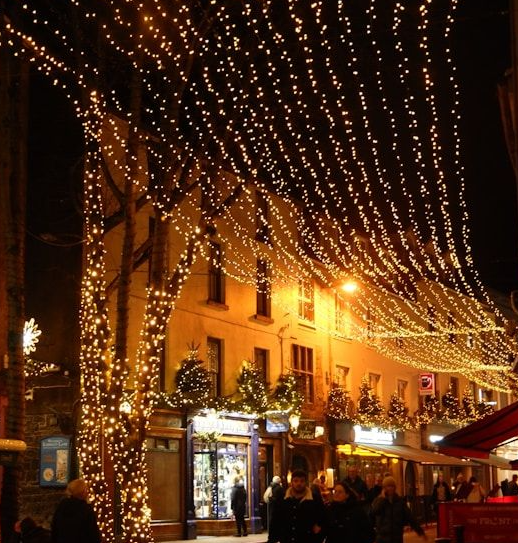
After four months of intense data capturing and analysis, it was a fascinating conversation with city leaders, because before we could even discuss the findings, we had to start with a much more fundamental question. What exactly is a night-time economy composition study, and why does it matter? 

Across the world, cities are rediscovering the importance of their night-time economies. From London to Amsterdam, Sydney to Dublin, leaders are beginning to recognise that what happens after 6pm is not simply entertainment. It is economic development, culture, safety, tourism, community life and urban identity. 

Yet when cities try to improve their night-time economies, they often start in the wrong place. They begin with perceptions, assumptions or isolated issues such as policing, noise complaints or licensing. Very few cities start by asking a much more fundamental question. What actually exists in the night-time economy today? 

This is where a Night-Time Economy Composition Study becomes essential. Recently I had the pleasure of presenting the final composition study for Galway City. Rather than focusing on the findings themselves, it felt like the perfect moment to reflect on why this type of research matters and why more cities should be doing it. 

What Is a Night-Time Economy Composition Study? 

A Night-Time Economy Composition Study is essentially a full audit of how a city operates after dark. It moves beyond anecdote and opinion to create an evidence-based picture of the ecosystem that makes up the evening and night-time economy. 

Typically, a composition study looks at several key layers. 
  • Business Composition
  • Business Composition
  • Operating Hours
  • Cultural and Experiential Offer
  • Safety and Public Realm Context
Let's break these down further.

1. Business Composition 

The starting point is understanding the types of businesses operating in the evening and night-time economy.
This usually includes:
  • Restaurants and cafés
  • Cultural venues such as theatres and galleries 
  • Pubs and bars
  • Entertainment venues such as cinemas and bowling
  • Pubs and bars
  • Hotels and accommodation
  • Takeaways and late food provision
  • Wellness and leisure spaces
Understanding this mix reveals whether a city has a balanced ecosystem or a narrow offer. 

For example, cities dominated by late bars may struggle with public perception and safety concerns, while cities with a broader mix of culture, food, music and leisure tend to create more diverse and inclusive nighttime environments. 

2. Spatial Distribution 

A composition study also maps where activity is located. Night-time economies often cluster into identifiable zones such as cultural quarters, late hospitality districts or transport hubs. Mapping these areas allows cities to understand how activity is concentrated and whether there are opportunities to develop new districts. 
This spatial understanding is critical for: 
  •  Policing and safety planning
  • Transport provision
  • Lighting and public realm design
  • Crowd management
  • Economic development

Without this spatial lens, policy decisions are often made without understanding how the city actually functions at night. 

3. Operating Hours 

Another key layer is analysing when businesses are open. 

Many cities assume they have a vibrant late-night economy, only to discover that most venues close before midnight. 
Understanding operating hours allows cities to identify:
  • Early evening economies
  • Late night clusters
  • Gaps in the offer after certain times
  • Pressure points when venues close simultaneously
This insight is particularly useful for planning transport services, managing dispersal and supporting late-night cultural activity. 

4. Cultural and Experiential Offer 

A strong night-time economy is not just about alcohol-led hospitality. 
 Composition studies examine the range of experiences available after dark, including:
  • Live music
  • Theatre and performance
  • Festivals and events
  • Cultural insitutions
  • Late-night museums and galleries
  • Immersive experiences
  • Food markets and street food
  • Wellness activities
Cities that diversify their evening offer tend to attract broader audiences including families, older visitors and tourists. 

5. Safety and Public Realm Context 

Finally, composition studies often include analysis of the surrounding environment that enables the night-time economy to function safely. 
This may include: 
  • Transport availability
  • Stewarding and safety initiatives
  • Lighting and street design
  • Policing patterns
  • Late-night food provision
  •  Taxi infrastructure
Understanding these supporting systems helps cities identify where the night-time economy is well supported and where improvements are needed. 

Why Composition Studies Matter 

The value of a composition study lies in one simple principle. You cannot manage what you do not measure. For many years, night-time economies have been shaped by fragmented information. Licensing data sits in one department, tourism statistics in another, cultural activity somewhere else and safety data somewhere else again. A composition study brings these layers together to create a single, shared evidence base. 

This evidence base is critical for several reasons. 

Strategic Planning 

Cities increasingly recognise the need for evening and night-time economy strategies. However, strategies that are not grounded in data often struggle to deliver meaningful change. Composition studies allow strategies to be built on real insight rather than assumptions. 

Balanced Ecosystems 

One of the most common challenges facing cities is an imbalance between different types of night-time activity. 

A composition study highlights whether a city is: 
  • overly dominated by alcohol-led venues 
  • lacking cultural infrastructure 
  • missing late food provision 
  • underperforming in early evening family activity 

This allows policymakers to support diversification and create healthier ecosystems. 

Economic Development 

Night-time economies represent a major economic opportunity. 

Globally they generate billions in revenue and support thousands of jobs in hospitality, culture, music, transport and tourism. 

Composition studies help cities identify where growth opportunities exist, whether that is expanding cultural programming, supporting new venues or developing underused districts. 

Public Safety 

A clear understanding of how a city operates after dark also helps improve safety. 

By identifying clusters, closing times and movement patterns, cities can better coordinate policing, transport, stewarding and welfare services. 

In other words, composition studies support proactive management rather than reactive responses. 

Collaboration 

Perhaps one of the most powerful impacts of composition studies is that they create a shared language between stakeholders. Local authorities, police, business groups, cultural organisations and community representatives can all work from the same dataset. This helps move conversations away from perception and towards constructive solutions. 
Write your awesome label here.

Final thoughts

Presenting the Galway study this week was a reminder of how powerful this approach can be. When cities take the time to properly understand their evening and night-time economies, the conversation changes. Instead of focusing only on problems, they begin to see opportunities. Instead of reacting to issues, they begin to design better nighttime experiences. And most importantly, they begin to recognise that the night-time economy is not a marginal part of city life. It is a vital part of how cities live, work, create and connect and instead of treating the night-time economy as a problem to manage, they begin to recognise it as an ecosystem to nurture. Cities that understand their night-time composition are far better equipped to shape vibrant, safe and culturally rich nights for the future. 

#Safeguarding#NightTimeEconomy#Licensing#LGBTQIA#Inclusion#CommunitySafety#HateCrimeAwareness#ViolencePrevention#SaferNights#PublicSafety#PlaceManagement#CityCentres#Hospitality#PartnershipWorking#EqualityDiversityInclusion#InstituteOfLicensing#LicensingLaw#NightTimeEconomyStrategy#LocalGovernment#CommunitySafety#SaferStreets#PublicHealth#CrimePrevention#HarmReduction#VenueSafety#CityManagement#StakeholderEngagement#InclusiveCities#EDI#StrategicPartnerships